

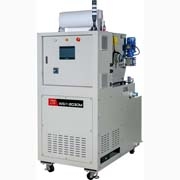
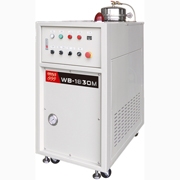
Industrial High-Pressure Coolant (HPC) Systems
Break through traditional cooling limitations. Engineerd by fluid dynamics experts at WULI Pump, our high-pressure delivery systems are custom-built for CNC machining centers, lathes, deep-hole drilling, and automated production lines. By injecting coolant directly into the cutting zone via heavy-duty plunger pumps, you instantly blast away thermal barrier and chips, dramatically extend tool life, refine surface finishes, and maximize throughput.
How Through-Spindle High-Pressure Coolant Works
In modern high-speed machining and tough material processing, conventional flood cooling often fails because the vapor blanket surrounding the spinning tool prevents fluid from reaching the actual shear zone. Through-Spindle Coolant (TSC) systems utilize industrial positive-displacement plunger pumps to force fluid at ultra-high pressures through the spindle and internal tool channels, delivering high-velocity fluid directly to the cutting edge.
The Engineering Advantage: High-pressure hydraulic impact pierces through intense cutting heat, dissipates extreme temperatures instantly, and ejects chips out of deep holes and pockets. This eliminates chip re-cutting, bird-nesting, premature insert failure, and workpiece scoring.
5 Key Advantages of High-Pressure Coolant Systems
1. Rapid Chip Evacuation
High-velocity fluid momentum instantly blasts chips away from deep cavities, preventing tool wrapping and recutting damage.
2. Extended Tool Lifespan
Drastically lowers cutting zone heat and prevents thermal shock, reducing insert chipping, edge wear, and tooling expenses.
3. Superior Surface Finish
Consistent, precise temperature control minimizes thermal expansion of the workpiece, ensuring tight tolerances and Ra finish excellence.
4. Maximized Machine Up-time
Minimizes machine downtime caused by manual chip clearing, tool changes, and jam-ups, driving higher overall equipment effectiveness (OEE).
5. Seamless Automated Operation
Fully compatible with 24/7 lights-out automated manufacturing, engineered for continuous, heavy-duty industrial workloads.
Key Machining Processes
- Deep-Hole & Gundrilling: Overcomes severe chip packing in deep features, maintaining hole straightness and roundness.
- Stainless Steel Machining: Prevents work hardening and built-up edge (BUE) while reducing extreme friction heat.
- Titanium & Superalloys: Controls intense heat buildup in low-thermal-conductivity materials to safeguard expensive inserts.
- High-Speed Milling (HSM): Counteracts rapid frictional heat generation to preserve cutting edge integrity.
- CNC Turning & Threading: Breaks tough, continuous stringy chips for rapid clearing and clean spindle operation.
Target Industries
System Selection & Pressure Guidelines
Selecting the optimal system configuration depends on workpiece material, cutting tools, and coolant type. WULI provides tailored solutions for your exact specs:
| Application & Machining Type | Recommended Pressure Rating |
|---|---|
| General CNC Turning Operations | 1,000 PSI / 70 bar Class |
| Standard CNC Milling & Drilling | 1,000 PSI / 70 bar Class |
| Deep-Hole Drilling & Gundrilling | 2,000 PSI / 140 bar High-Pressure Class |
| Hardened Steels & Exotic Superalloys | 2,000 PSI / 140 bar High-Pressure Class |
| Automated High-Volume Production Lines | 1,000 ~ 2,000 PSI Variable Pressure Class |
Flow Rate Sizing (GPM / LPM)
Flow capacity is customized according to tool orifice diameters, multi-tool setups, and machine spindle specifications.
Fluid Compatibility & Integration
Compatible with water-soluble, semi-synthetic, synthetic coolants, and straight oils. Can be paired with fine filtration and oil chillers.
Why Choose WULI High-Pressure Coolant Systems?
Frequently Asked Questions (FAQ)
Q1: What are the primary functions of a High-Pressure Coolant (HPC) system?
Ans: The main functions are delivering precise target cooling to the cutting tip, rapidly flushing chips from deep holes, mitigating extreme heat buildup, enhancing surface finish quality, and extending tool life.
Q2: Which machining processes benefit most from Through-Spindle Coolant (TSC)?
Ans: Deep-hole drilling, gundrilling, stainless steel and titanium machining, high-speed milling, and automated 24/7 continuous production lines gain the highest ROI from TSC integration.
Q3: How does high-pressure coolant solve chip clogging and tool breakage?
Ans: The system utilizes high hydraulic force to blast chips out of narrow tool flutes and deep blind holes, preventing chip re-cutting, tool packing, and premature insert failure.
Q4: Can WULI systems be retrofitted onto existing CNC machinery?
Ans: Yes. Most TSC-ready CNC vertical or horizontal machining centers and turning centers can be easily retrofitted with customized plumbing, filtering units, and signal interface kits.
Q5: How does high-pressure cooling reduce consumable tooling costs?
Ans: By suppressing thermal shock and work hardening at the cut zone, cutting edge wear and micro-chipping are dramatically reduced, often yielding a 30% to 200%+ increase in tool life.